Final Cut Pro Wont Let Me Upload to Youtube Keychain
You've spent months editing and grading and finishing your beloved video. But now you have to upload it to social media for it to be seen past the earth and y'all want the best quality possible. I thought I'd accept a expect backside the scenes of YouTube's encoding and how to go the most out of it.
I am old enough that some of my early piece of work can be found on YouTube at very low resolutions. This music video I cut with Pete Doherty wandering around London was shot on 35mm black and white film stock and is on YouTube at a miserly 360p. It makes me want to cry.
With YouTube supporting 4K and 8K and even HDR, you lot want the best quality y'all tin can when yous upload and you want to minimize the degradation that YouTube'southward encoding does to your video.
Recommended Specs
YouTube'due south recommended specs page is written with the average user in listen and tin can be safely ignored. At that place's no mention of uploading ProRes (or Cineform or DNxHR for that affair) and yet you can and you lot should if yous have the bandwidth, particularly as YouTube, unlike Vimeo, has no upload quota. Doing this avoids 1 extra round of H.264 encoding. Many people have tested and shown that YouTube will re-encode what you requite it no affair what (one fifty-fifty testing what happens when you run it through YouTube 1000 times! ). So that does abroad with trying your best to make the best low bitrate H.264 encode y'all can.
Clearly, with the volume of video that passes through YouTube (estimated at around 300-500 hours every minute!), they tin can't spend the quality time encoding our masterpiece as nosotros would like and they have to keep the bitrates correct down. A general rule for encoding is that you get ameliorate quality video if the software encoder takes longer (e.yard. 2 pass encoding in Premiere or the boring preset in Handbrake) or if y'all proceed the bitrate higher. Youtube isn't peachy on either of these options as it has so much video to encode that it wants to get the task done quickly and lowering the bitrate means less server storage space & a lower demand on the viewer's internet connection. It also has to brand multiple files then that it can dynamically switch resolution on the fly.
That said, it has improved vastly over the years every bit can be seen from my one-time video from 2009 and it is possible to look behind the curtain and see what files YouTube is making, for example with the control line tool youtube-dl .
Behind the drapery
Here is the output from youtube-dl on my erstwhile video using the -F flag to come across the files available:
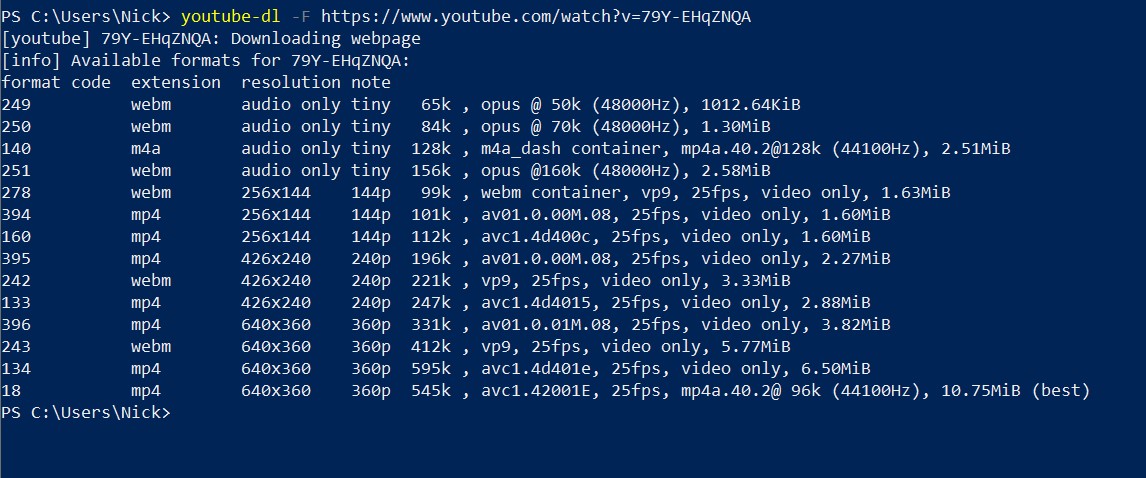
Information technology shows that there are 14 dissimilar files even with a maximum resolution of 360p.
The columns are in order:
- Format lawmaking – a number that you tin can target if you desire to download that file
- File extension – represents the container ( the packaging around the codec ) which we won't worry much about here
- Video Resolution (written as both 640×360 and 360p which are the aforementioned thing)
- Bitrate
- Codec, frame rate, file size, etc.
You lot can find HDR YouTube clips with over forty different files associated with the video similar this i which gives this output:
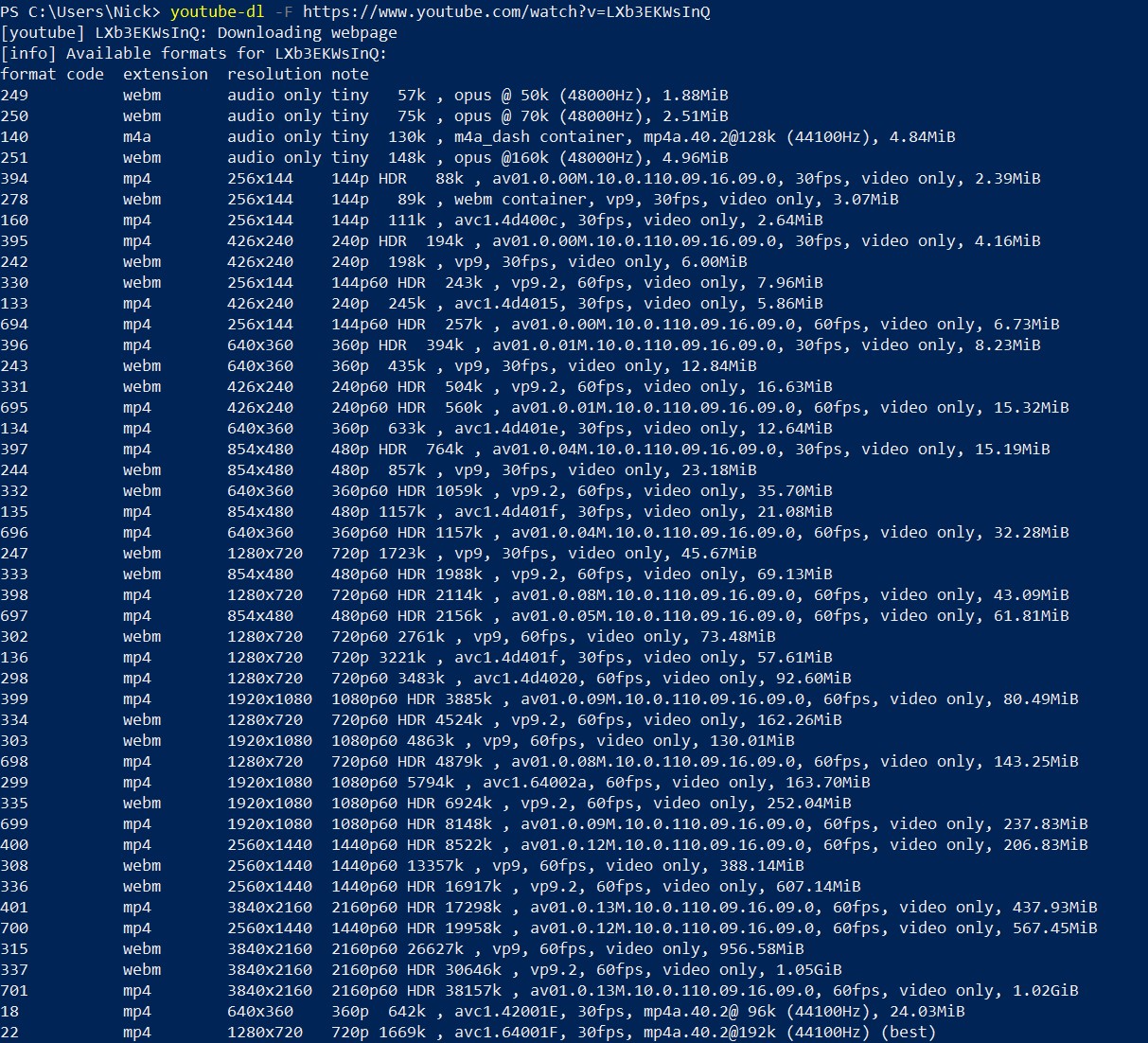
This might seem overly complicated, merely in that location are a few key conclusions we can draw which will help the states.
You can encounter that YouTube encodes using three different video codecs:
- H.264 a.g.a AVC
- VP9 , which is pretty similar to H.265 a.grand.a HEVC , only avoids the licensing. It takes longer to encode, but the file size is smaller (see this frame.io blog for more info)
- AV1 , which is VP'due south successor.
Each is a new generation of codec which can get the same quality at a smaller file size, which is great for YouTube. The merchandise-off is that they in turn take longer to encode and this is why your YouTube upload initially might only show in SD and then HD and tin take a long time to show in 4K (sometimes information technology's the next day). They also require more powerful hardware to decode – which is why you often see editors complaining about the H.265 files they've been sent – simply in this case, information technology means your device volition decide what you see. You have some control in your YouTube playback settings simply I doubt many people are changing those, plus YouTube is going to make sure you can watch the video earlier whatsoever quality concerns. The takeaway is that the quality the viewer sees is variable and depends on both their cyberspace connectedness and their hardware.
A question that comes up a lot is this:
Should one upload to Youtube in 4K?
Seems like a no-brainer if your file is 4K, but what if you only have an HD video?
Testing
I ran some tests to encounter how YouTube would handle both a 1080p file and an upscaled 4K UHD file of the same clip.
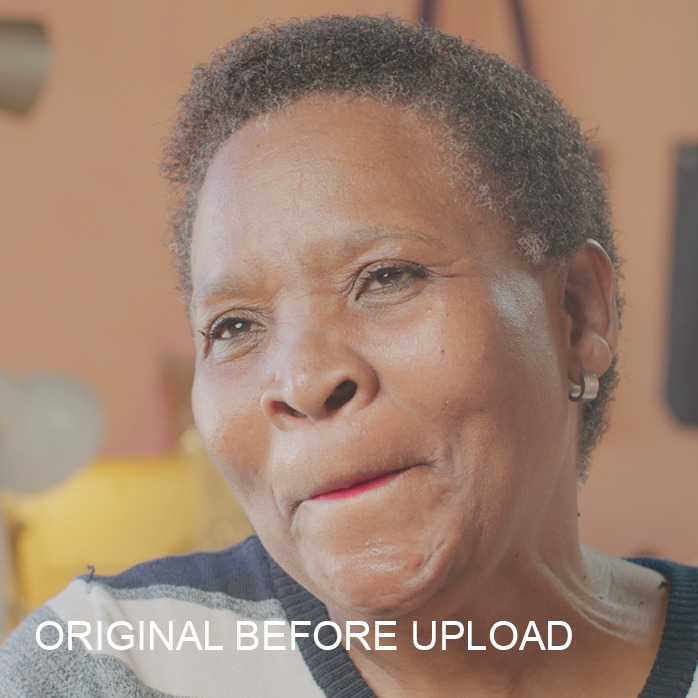
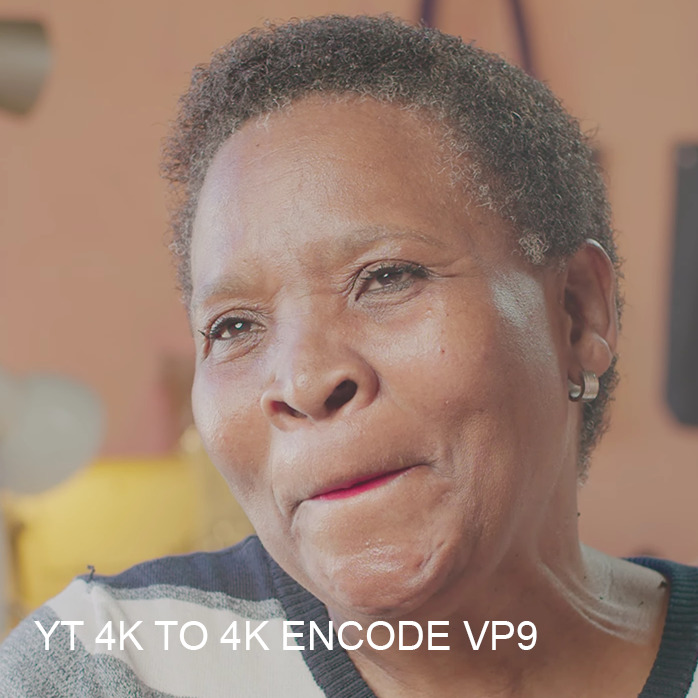
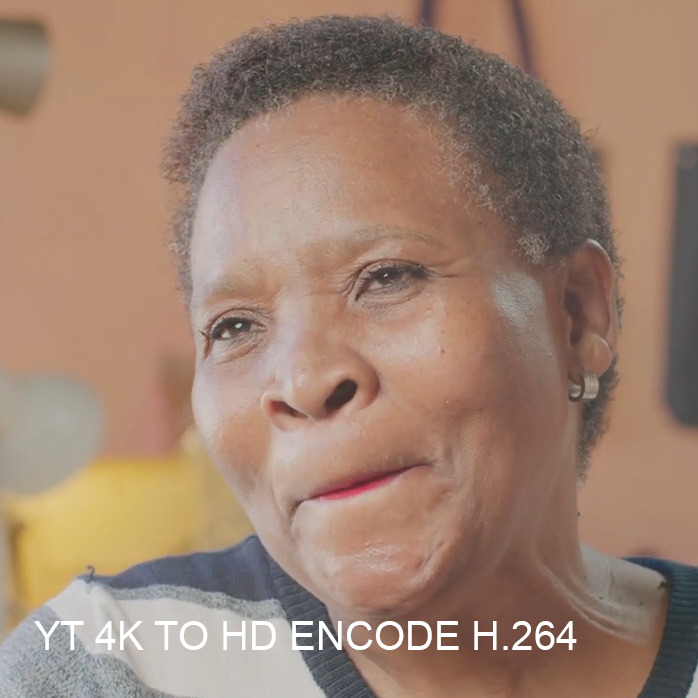
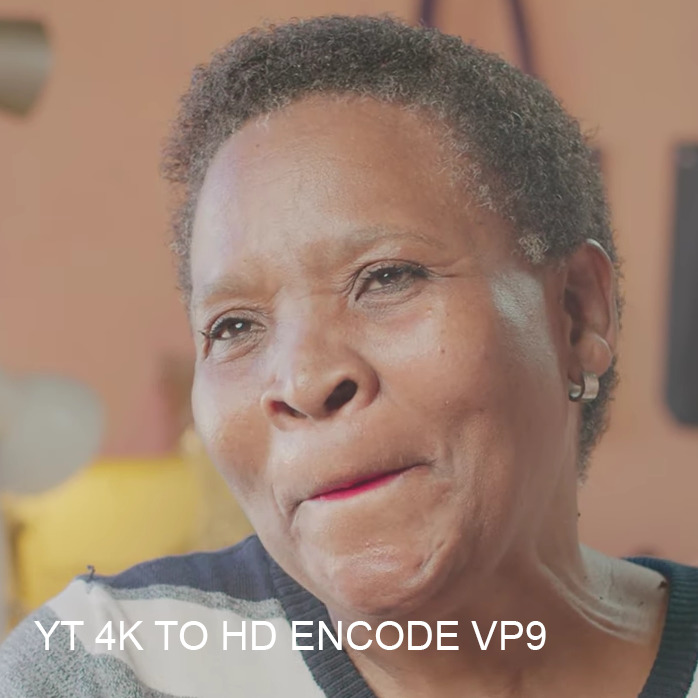
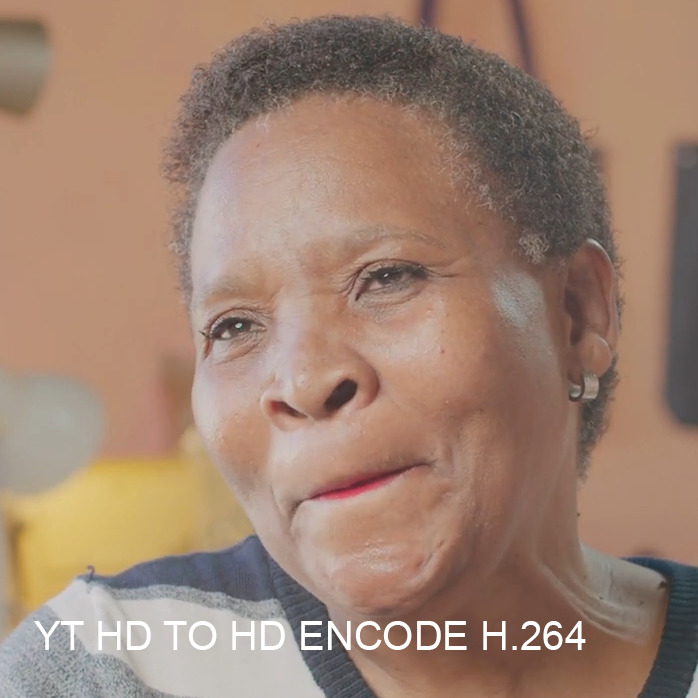
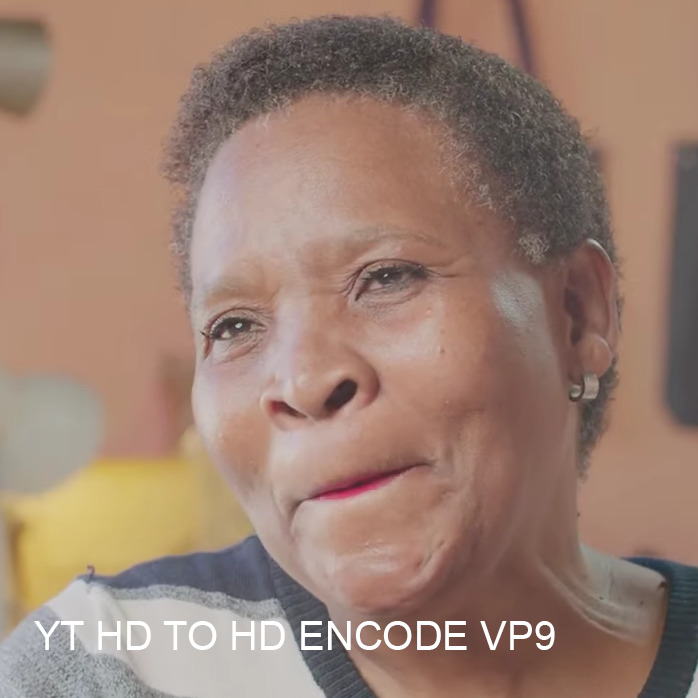
I constitute:
- For the H.264, the divergence was minimal
- For the VP9, the file created from the 4K upload was much meliorate
- The VP9 files had a slightly better sharpness but had a color shift (this is an ungraded clip and it may exist that the colours are out of gamut)
This is simply a snapshot test so I would encourage yous to examination your own footage (testing a 10-second reference export saves time).
YouTube favours 4K
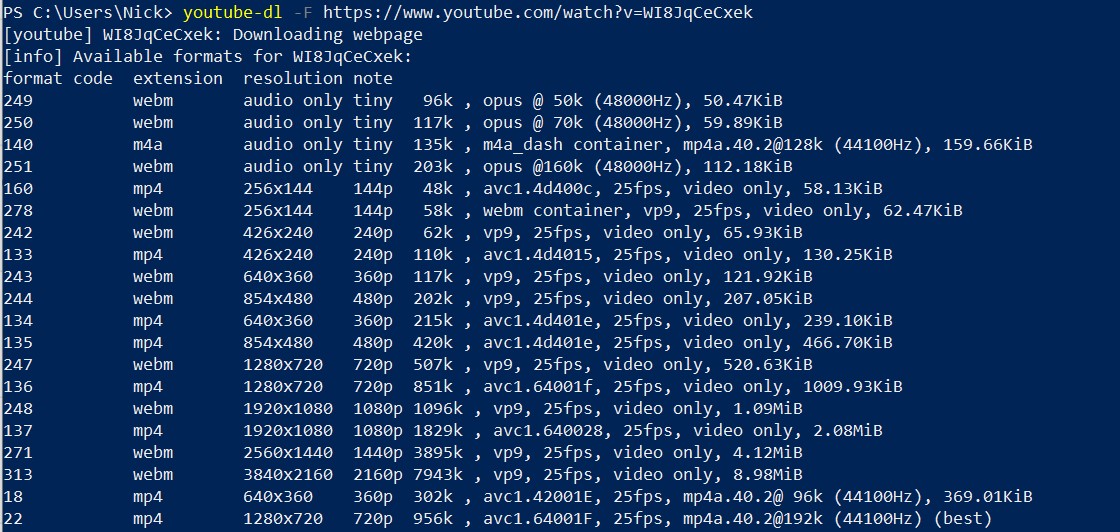
The youtube-dl info shows that the 4K UHD VP9 file was 8Mbps compared to the 1080p file beingness 1 Mbps. Granted a 4K UHD video is similar 4 HD videos stacked together, but then you'd just look iv times the bitrate, whereas information technology'due south 8 times higher. YouTube conspicuously favours 4K (but every bit I said above, you lot accept to be pretty patient before this actually shows up).
My conclusion is that there are major advantages to uploading 4K video to YouTube. Even if you lot are working in HD, yous might observe it's worth your fourth dimension to upscale information technology before uploading, peculiarly if done at high quality (see our recent upscale shootout link: A.I. Upscaling Software Shootout). There is too a measure of future proofing to this – YouTube's 4K encodes are currently ameliorate quality and more and more people will lookout man it in 4K moving forward.
The caveat to this is that doing the upscaling might mean introducing digital-looking artifacts or over-sharpening and this might offset any gains yous might have. Either way, those of you lot who gaze at your class ane monitor for a living may be better not to meet it on YouTube at all.
Source: https://www.provideocoalition.com/uploading-to-youtube-is-4k-worth-it/
0 Response to "Final Cut Pro Wont Let Me Upload to Youtube Keychain"
ارسال یک نظر